Sell House Fast Bristol
Bristol holds a title most sellers have never heard of and estate agents rarely mention: it’s England’s Japanese knotweed capital. Analysis by invasive species specialist Environet identif...
Selling your home 'as is' means offering it in its current state without any revamps, attracting cash buyers who expect to handle the fixes themselves. You must disclose known issues legally, complete the TA6 form, and provide a valid EPC, but don't worry—investors are often prepped to absorb lower energy ratings and renovate as needed.
Selling a house in ‘as-is’ condition means putting your property on the market in its current state, without carrying out any repairs, improvements or renovations before completion. The buyer accepts the house warts and all, and prices their offer accordingly. It is the honest route for anyone who wants to sell house in poor condition without spending a penny on builders first.
You are not doing anything unusual. Thousands of homes across the UK sell every month with damp patches, dated kitchens, leaking roofs and overgrown gardens. The question is not whether you can sell a house in poor condition. It is which route gets you the best outcome for your circumstances.
We buy houses in any condition for cash, every week. So we know exactly where sellers get caught out. This guide covers all of it.
‘As-is’ means the buyer purchases your property in its present condition and you take no responsibility for fixing anything before completion. No repainting. No new carpets. No repairs to the boiler that packed up last winter.
What it does not mean is that you can hide problems. You still have a legal duty to answer the buyer’s questions honestly. More on that below, because this is where sellers get themselves into serious trouble.
The ‘as-is’ label simply sets expectations upfront. Buyers know they are pricing in the work, and you know you won’t be asked to lift a paintbrush.
A property is generally considered to be in poor condition when it has defects that reduce its value, put off mortgage lenders, or need significant work before anyone could live there comfortably.
Common examples include:
Some of these are cosmetic and cheap to sort. Others make your property unmortgageable, which cuts out the vast majority of open-market buyers at a stroke. A house with no kitchen, a short lease or active subsidence will not pass a lender’s survey. That leaves cash buyers, auction bidders and developers as your realistic audience.
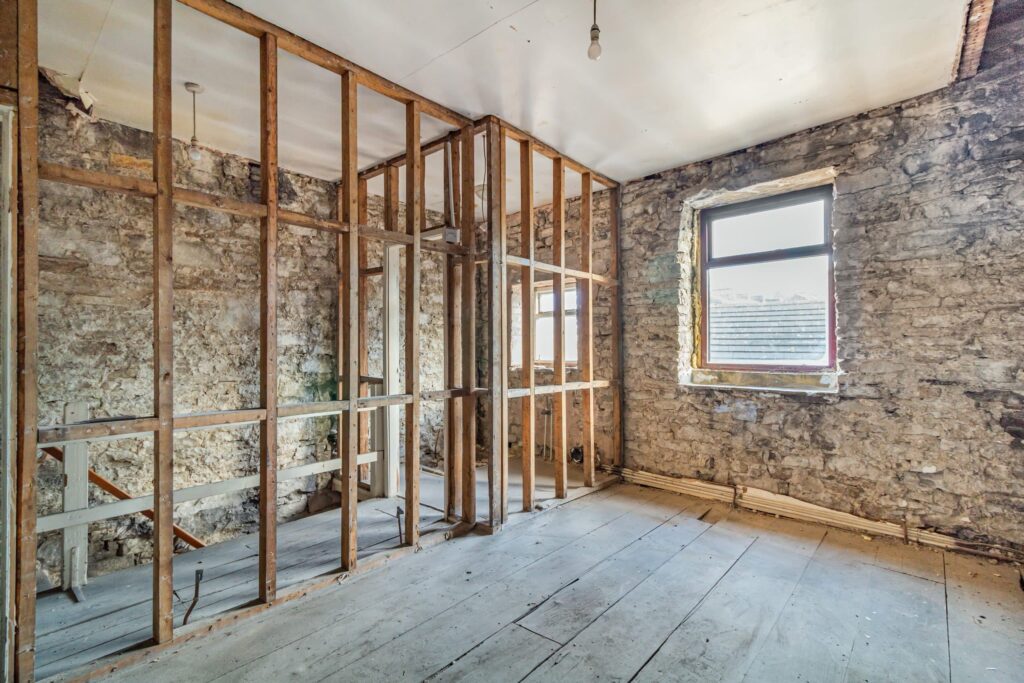
Yes, but expect a slower sale, fewer offers and more fall-throughs. According to the UK Government, an average property sale takes two to three months. A house in poor condition typically takes longer, because mortgage-dependent buyers get spooked by survey results and lenders down-value or refuse to lend altogether.
Around one in three property transactions in England and Wales falls through before completion. That figure gets worse for problem properties. A buyer falls in love with the ‘potential’, their surveyor produces a report full of red ink, and they either renegotiate hard or walk away. You then re-list, drop the price, and start again three months older.
If you have time on your side and a property that is tired rather than broken, the open market can still work. Price it realistically for its condition, not against the refurbished house that sold two doors down. Overpricing is the single biggest reason houses in poor condition sit unsold.
Usually not, unless the work is minor and the numbers genuinely stack up. Run a simple cost-benefit calculation before you spend anything.
Say your house is worth £300,000 as it stands. A full refurbishment costs £60,000 and takes six months of managing builders, delays and skips on the drive. The finished house might fetch £380,000. That is £20,000 of profit before you count your time, stress, council tax, insurance and mortgage payments while the work drags on. Most sellers conclude it simply isn’t worth it.
There is also no guarantee a refurbishment adds value. Everyone’s definition of perfect is different. A buyer who loves period features will not thank you for ripping out a Victorian fireplace and fitting a modern electric one. During the works your property will look far worst before it looks better, and you will be at the mercy of trades turning up in the right order.
If you do anything at all, keep it cheap: clear the clutter, book a man with a van for old furniture, and give it a deep clean. Buyers need to see the space, not your late uncle’s hoarded newspapers. Although if the house is full of contents, that is not a problem for us: we buy properties with everything left inside.
There is no easier way to sell a house today.



You have three realistic routes: an estate agent, an auction, or a genuine cash house buyer.
An estate agent gives you the widest audience and potentially the highest headline price, but the least certainty. Survey renegotiations, mortgage refusals and chain collapses are all common with poor condition properties, and some agents’ fees still apply even after months of waiting.
An auction gives you certainty once the hammer falls, because the buyer exchanges contracts on the day and pays a 10% deposit. Auctions suit unmortgageable and structural-problem properties well. The downsides are the two-to-three month timescale from entry to completion, auction fees, and the risk your property doesn’t meet its reserve on the day.
A cash house buyer gives you speed and certainty together. A genuine cash buyer needs no mortgage, no survey and no chain, so completion can happen in days rather than months. The trade-off is price – a cash buyer pays below market value. Whether that trade-off makes sense depends on your holding costs, which is exactly what the table below sets out.
A genuine cash buyer will typically pay around 70% of market value. That sounds like a big discount until you compare what you actually walk away with after a long open-market sale. Here’s an honest breakdown:
| Open Market Sale | Property Saviour | |
|---|---|---|
| Asking price | £100,000 | £70,000 |
| Price agreed after survey renegotiation | £92,500 | £70,000 |
| Estate agent fees (approx. 2% + VAT) | £2,220 | £0 |
| Solicitor’s fees | £1,500 | £0 (we pay £1,500 towards them) |
| Mortgage, council tax, insurance and bills while you wait 6+ months | £5,000+ | £0 |
| Ongoing repairs and maintenance during the sale | £1,000+ | £0 |
| Net amount in your pocket | £82,780 or less | £70,000 |
| Time to complete | 6–9 months, if it doesn’t fall through | As little as 10 days |
The gap is much smaller than the headline suggests. And the open market figure assumes your sale completes first time, which one in three don’t.
Everything material that you know about. Under the Consumer Protection from Unfair Trading Regulations 2008, you must give buyers a full and accurate picture of your property’s condition. Selling ‘as-is’ does not exempt you from this. Hiding a known problem is misrepresentation, and buyers can sue you after completion – successful claims have run into tens of thousands of pounds.
You’ll complete the Law Society’s Property Information Form (TA6) and Fittings and Contents Form (TA10) once a sale is agreed. Disclose it all: subsidence history, damp, Japanese knotweed, neighbour disputes, flooding, unapproved building work, noisy neighbours you’ve reported to the council or Police. If your neighbours host live music every weekend, write it down.
Honesty saves everyone time and money. What puts one buyer off is a selling point for another – a house next to a school is perfect for a young family. And if you’re an executor selling an inherited property you’ve never lived in, say so on the forms. You can only disclose what you actually know.
| Method of sale | Value achieved | Fees | Timeframe | Is sale guaranteed? |
|---|---|---|---|---|
| Estate agents | 90–95% | 1–5% | 3–6 months | No – one in three sales collapse |
| Auctioneers | 70–80% | 2% plus | 2–3 months | No – half of properties don’t sell |
| Property Saviour | 70–80% | £0 | 10–28 days | Yes – 99% success rate |
This is the part of the industry nobody talks about. Plenty of ‘cash buyers’ have no cash at all. They agree a price, tie you in for months while they arrange bridging finance or try to sell your contract on to someone else, then drop the price at the last minute when you’re too far in to walk away.
Before you sign anything, vet them properly:
Five minutes on Companies House will tell you more than an hour on their website.

Because we remove every reason a poor condition sale normally fails. We buy your property with our own cash, in its current state, whatever that state is. Fire damaged, hoarded, unmortgageable, mid-repossession, tenanted, inherited – we’ve bought them all.
Here’s our Price Promise: the price we offer is the price you receive, with no hidden deductions and no last-minute reductions. We carry out no survey, because we don’t need one. We provide proof of funds with every formal offer, and you’ll have a proceedable offer within 48 hours.
We’ll also pay £1,500 towards your legal fees, and you’re welcome to use your own solicitor. There are no estate agent fees, no mortgage companies and no chain. We’re members of The Property Ombudsman, so you have independent protection, and our five-star reviews come from sellers who were in exactly your position. If you have another buyer, put us in a contracts race and see who completes first.
We can complete in as little as 10 days, or at whatever timescale suits you. You stay in control throughout.
Yes, you need a valid Energy Performance Certificate to market any property, regardless of condition. They cost around £60–£120 and last ten years.
You don’t need to repair a thing. You don’t need to clear the contents. You don’t even need to tidy up before we visit.
Get in touch today for a free, no-obligation cash offer. We’ll give you a proceedable offer within 48 hours, pay £1,500 towards your legal fees, and complete in as little as 10 days – or at a pace that suits you. That’s the truth about selling a house in as-is condition: with the right buyer, it’s the easiest sale you’ll ever make.

Whether you’re facing a tricky sale, navigating probate, or simply looking to sell fast without hassle, you’re in the right place. Our blog is packed with practical advice, expert insights, and real-life tips to help homeowners, landlords, and executors across England, Scotland and Wales make informed decisions — whatever the condition of their property.