
Sell House Fast Bristol
Bristol holds a title most sellers have never heard of and estate agents rarely mention: it’s England’s Japanese knotweed capital. Analysis by invasive species specialist Environet identif...
Navigating tenant inspection in the UK can be a right hassle for landlords, especially with the latest Renters' Rights Act. Despite giving proper notice, tenants can legally refuse entry, making it crucial to understand the legal ins and outs to protect your property rights effectively.
You own the property. You pay the mortgage, the insurance, the maintenance bills. You have given the correct notice, been polite, been patient — and still, the door stays shut. If that sounds familiar, you are far from alone.
According to the House of Commons Library (2024), there are approximately 4.7 million households renting privately in England — around 11 million people living behind doors that landlords cannot always access. The English Private Landlord Survey 2024 puts the number of private landlords in England at roughly 2.3 million. A significant proportion of those landlords report difficulties gaining entry to their own properties, whether for routine inspections, essential safety checks, or pre-sale viewings.
The situation became more complex still when the Renters’ Rights Act 2025 received Royal Assent on 27 October 2025. From 1 May 2026, no-fault Section 21 evictions were abolished entirely. For landlords already struggling with tenant access, the legal landscape shifted — and not in their favour.
This article explains exactly what the law says. It walks you through your options clearly and honestly. And if you have reached the point where you simply want out — it sets out the fastest, most straightforward method of sale currently available in the UK.
This is not a failure on your part. It is one of the most common frustrations in the private rented sector.
You sent the notice in writing. You gave more than 24 hours. You were reasonable about the timing. And still — silence, a vague excuse, or a flat refusal. The law, frustratingly, protects the tenant even in this situation. Understanding exactly why is the first step to knowing what you can actually do about it.
The legal framework governing landlord access sits across several pieces of legislation. The key ones are:
Section 11 of the Landlord and Tenant Act 1985 — requires landlords to maintain the structure, exterior, and essential services of a rental property. Inspections are a legitimate part of fulfilling this obligation.
The Housing Act 1988 — gives every tenant in England the right to “quiet enjoyment” of their home. This right means tenants are entitled to live without unnecessary interference from the landlord, letting agent, or any third party.
The Renters’ Rights Act 2025 — the biggest reform to the private rented sector since the late 1980s. Abolished assured shorthold tenancies and no-fault Section 21 evictions from 1 May 2026. Introduced rolling periodic tenancies as the default.
These three pieces of legislation sit in tension with one another. That tension is what makes tenant inspection refusal such a genuinely complicated legal area.

Yes. A tenant can legally refuse a landlord inspection — even when the landlord has given the correct 24 hours’ written notice.
A notice period requests access. It does not grant an automatic right to enter. The tenant’s consent is still required. This surprises many landlords, but it is the established legal position in England and Wales.
The tenant’s right to “quiet enjoyment” and “exclusive possession” under the Housing Act 1988 means they can exclude anyone from the property — including the owner. Entering without consent, outside of a genuine emergency, is trespass. It can also constitute harasment under the same Act.
That said, a tenant cannot refuse indefinitely without consequence. Persistent, unreasonable refusal — especially of legally mandated safety inspections — can amount to a breach of the tenancy agreement. We will come to that shortly.
A landlord must give at least 24 hours’ written notice before any inspection in England and Wales. That is the legal minimum under the Landlord and Tenant Act 1985.
The notice must be in writing — a text message or email is sufficient and creates a record. It must clearly state the date, the proposed time, the reason for the visit, and who will be attending. A casual phone call is not legally sufficient on its own.
The law also requires the visit to take place at a “reasonable time.” That means normal daytime hours — not early morning, late evening, or at times that are clearly inconvenient. Giving 48 to 72 hours’ notice, where possible, is considered good practice and tends to generate far better cooperation.
No — except in a genuine emergency. The law is very clear.. If there is an immediate risk to life or serious property damage — a gas leak, structural flooding, or a fire — a landlord may enter without prior notice.
Outside of those circumstances, entering without the tenant’s permission is unlawful. It does not matter that you own the property. The tenancy grants the tenant exclusive possession, and that right overrides the landlord’s proprietary interest in most situations.
If a landlord uses a key to enter without consent, they risk a harassment claim under the Housing Act 1988, a trespass action, and potentially a referral to the local council’s housing team. The consequences are serious and avoidable.
There is no fixed legal limit on inspection frequency in England — but the frequency must be reasonable.
Most tenancy agreements specify quarterly or twice-yearly inspections as a reasonable baseline. Inspections more frequent than that — without clear justification, such as a reported maintenance concern — can cross the line into harassment under the Protection from Eviction Act 1977.
The focus of any inspection should be the condition of the property, not the tenant’s lifestyle or personal habits. If a landlord starts using inspections as a means of pressuring a tenant, the tenant has recourse — and the landlord faces legal risk.
There is no easier way to sell a house today.



The boundaries of a lawful inspection are tighter than many landlords realise. During an inspection, a landlord must not:
If any of the above occurs, the tenant can seek advice from Shelter, Citizens Advice or the local council. Landlords who cross these lines risk formal complaints, compensation claims, and — in serious cases — criminal prosecution under the Protection from Eviction Act 1977.
No. A tenant does not have to be present — but they have every right to be if they choose.
If a tenant is uncomfortable with the landlord entering whilst they are absent, they can insist on being present. That is entirely within their rights. Equally, if the tenant agrees to the inspection but cannot be home, the landlord may proceed — provided that arrangement was explicitly agreed in advance.
Some landlords occassionally assume that a tenant’s agreement to an inspection whilst absent means permanent open-ended access. It does not. Each visit requires its own notice and — ideally — its own written agreement.
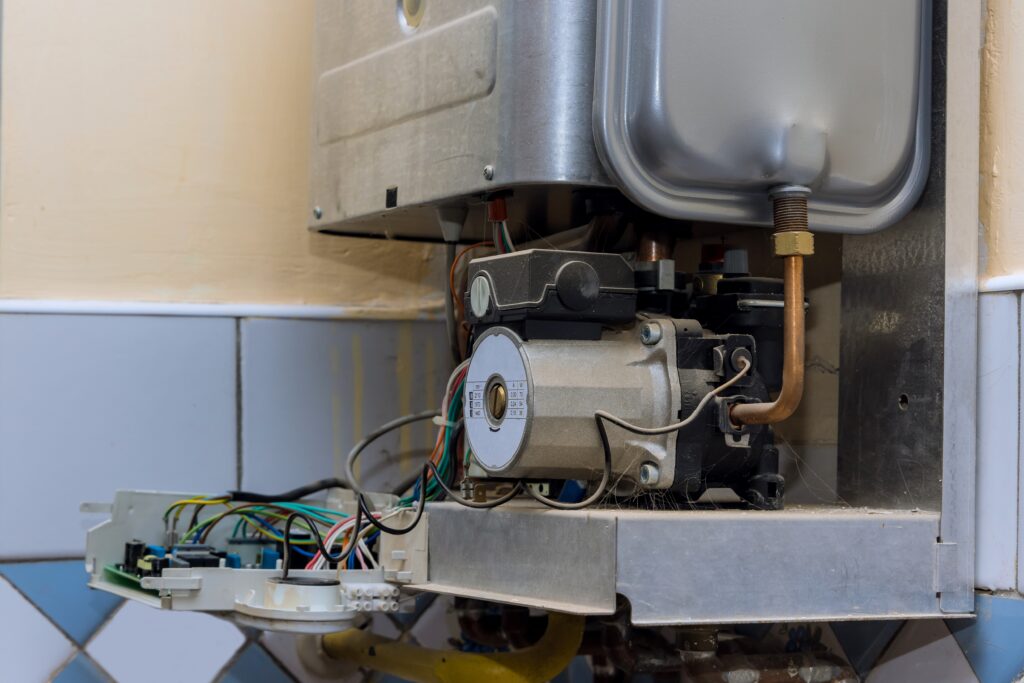
This is where refusal moves from frustrating to genuinely dangerous. Annual gas safety inspections (CP12 certificates) are a legal requirement for all rental properties in England. Electrical Installation Condition Reports (EICR) are mandatory every five years under the Electrical Safety Standards in the Private Rented Sector (England) Regulations 2020.
A tenant who blocks these inspections is not just making life difficult. They may be putting themselves — and neighbouring properties — at real risk. If you find yourself in this situation, follow these steps in order:
Document every communication. Every email, every letter, every unanswered call. That paper trail is your protection.
If you own a rental property and you’ve tried everything you know how demoralising this can be. The key is to escalate lawfully and methodically — never to act unilaterally.
Start by rearranging. A single refusal based on inconvenient timing is not unreasonable. Offer a different date and time in writing. Be flexible. This approach also demonstrates to any future court that you acted reasonably throughout.
If rearranging fails, send a formal letter setting out the reason for the inspection, the legal obligation, and the consequences of continued refusal. Warn the tenant that persistent obstruction could be considered a breach of their tenancy agreement. Keep the tone professional — not threatening. If the relationship has deteriorated beyond repair, seek legal advice on Section 8 grounds, particularly Ground 12, which covers breach of any obligation in the tenancy.
Refusing a properly noticed inspection without reasonable justification can constitute a breach of tenancy and create grounds for a Section 8 possession claim.
However, one refusal due to a genuine scheduling conflict is unlikely to result in eviction. Courts expect landlords to have tried every reasonable avenue first. A single refused inspection, without a pattern of behaviour, is rarely sufficient.
Repeated, deliberate refusal — especially where safety inspections are being blocked — is a different matter entirely. Following the Renters’ Rights Act 2025, landlords can no longer rely on Section 21. But Section 8 possession remains available on legitimate grounds. Ground 12 (breach of tenancy obligation) and Ground 14 (antisocial behaviour) may be relevant depending on the circumstances. Take legal advice before serving any notice.
Sometimes the inspection problem is a symptom of something bigger. A tenant who will not allow access is often a tenant with something to hide — unauthorised occupants, property damage, subletting, or simply a relationship with the landlord that has completely broken down.
When that happens, no legal notice and no amount of patience will fix things. The property becomes a liability. It cannot be marketed properly. Buyers who need a mortgage cannot purchase it. And every month it sits, costs accumulate — insurance, council tax, mortgage payments, maintenance — whilst the problem compounds.
This is the point at which many experienced landlords begin looking at their method of sale very seriously.
If you are selling an inherited home that comes with a sitting tenant, the situation is often even more layered.
You may be acting as executor of an estate, managing grief and legal paperwork simultaneously. The last thing you need is a tenant who refuses inspection and blocks any attempt to value or sell the property. Many executors who are selling inherited property find that conventional methods of sale simply cannot cope with an uncooperative occupant.
The property may carry decades of deferred maintenance. It may have a regulated tenancy with protections that pre-date modern landlord law. It may be in a condition that mortgage lenders will not accept. Each of these factors narrows your options significantly. At Property Saviour, we handle these situations regularly — and have a clear process that does not depend on the tenant’s cooperation.
| Method of sale | Value achieved | Fees | Timeframe | Is sale guaranteed? |
|---|---|---|---|---|
| Estate agents | 90–95% | 1–5% | 3–6 months | No – one in three sales collapse |
| Auctioneers | 70–80% | 2% plus | 2–3 months | No – half of properties don’t sell |
| Property Saviour | 70–80% | £0 | 10–28 days | Yes – 99% success rate |
Property auction sounds attractive on paper. It feels decisive. But the reality, particularly for tenanted properties, deserves a harder look.
Here is the thing about auction success rates — they are not quite what they seem. Auction houses quietly withdraw properties that are not generating interest before sale day, then calculate their “success” percentages based only on lots that actually make it to the rostrum.
It is a clever bit of statistical sleight of hand. If 100 properties are listed initially but only 70 generate enough interest to warrant offering at auction, the auctioneer will trumpet a 70% success rate if 49 of those 70 sell. What they will not mention is that 30% of the original properties never even got their moment under the hammer.
This practice makes auction houses look far more effective than they really are, whilst leaving sellers with a false sense of confidence about their chances. You deserve to know the full picture before putting your property into a system that might quietly sideline it if initial interest proves disappointing.
On top of that, consider the practical realities for tenanted properties:
Auction is occasionally the right method of sale. For a tenanted property with a difficult occupant, it rarely is.
An estate agent needs to do two things to sell your property. They need to value it — and they need to show it. If your tenant refuses access for either, the agent is helpless.
Most buyers want to visit a property at least twice before committing. One awkward or hostile encounter with a tenant during a viewing can end a sale permanently. Buyers talk to their solicitors, their mortgage brokers, their family. “The tenant was strange when we visited” is enough to make a cautious buyer walk away.
The costs add up too. Estate agent commission typically runs between 1% and 3.5% of the final sale price. Add conveyancing fees, potential repair requirements flagged in the buyer’s survey, and the ongoing costs of a property that can sit on the market for months. All the while, your tenant has no legal obligation to cooperate with any of it. The traditional method of sale was designed for vacant properties. It was not built for situations like yours.
If you have decided to sell — whether you are dealing with a difficult tenant, selling a house with sitting tenants, or simply exhausted by the process — a cash buyer sounds like the clean solution. And it can be. But not all cash buyers are what they claim.
Here is a simple check that takes under two minutes. Go to Companies House and search for the company name. Then look at the charges registered against that company.

A genuine cash buyer purchases with their own capital — or at most, a single clean credit facility from one lender. What you are looking for is the opposite of that. A company with five, six or seven different charges registered against it — from multiple different finance houses — is not buying with cash. They are leveraged to the point where they depend on bridging loans and refinancing to complete each transaction. If their funding chain breaks, your sale collapses.
Also check their filing history. Dormant filing periods, late accounts, or a registered address that turns out to be a virtual office should all raise concern. Then ask them directly: “Can you provide proof of funds today?” A legitimate cash buyer will produce evidence without hesitation. One relying on bridging finance will stall, deflect, or offer vague assurances instead.
At Property Saviour, our Companies House record is open. No sprawling charge strings, no dormant periods, no virtual office. Proof of funds is available on request — before you commit to anything.
We buy at 70% of realistic open market valuation. That figure is not arbitrary. It reflects the genuine, unavoidable costs of purchasing a property, holding it, and eventually reselling it in the open market.
Here is exactly where that 30% goes — laid out transparently:
| Cost Element | Approximate Percentage |
|---|---|
| Legal costs — conveyancing for both sides | 2% |
| Holding costs — insurance, council tax, utilities, cleaning | 3% |
| Stamp Duty Land Tax — mandatory, cannot be avoided | 5% |
| Eventual resale costs — estate agent fees and solicitors | 5% |
| Gross profit before tax — our margin for taking all risk | 15% |
| Total costs absorbed by Property Saviour | 30% |
What you recieve in return is certainty, speed, and a genuine exit. No viewings to negotiate. No tenant cooperation needed. No survey surprises. No chain. No waiting six months to find out a buyer has changed their mind.
We handle the legal process from start to finish. We manage the tenant relationship. We can complete in as little as two weeks — or on a longer timescale if that suits your situation better.
We are not an estate agent. We are not an auction house. We are a genuine property buyer — and that distinction matters enormously when you are dealing with a tenant who refuses inspection, blocks viewings, or simply makes a conventional sale impossible.
We buy properties that other buyers will not touch. We have completed on properties where tenants refused all access for months. We handle regulated tenancies, lifetime tenancies, and assured periodic tenancies under the Renters’ Rights Act 2025 — as standard.
There are no agent fees taken from your sale price. We cover the legal costs on both sides. And we are honest with you from the first conversation: if we believe a traditional sale would serve you better, we will tell you.
But if your situation is complicated — inspection refusal, inherited property, probate delays, condition issues, or a tenancy structure that makes mortgage-backed buyers walk away — then Property Saviour is almost certainly your fastest and cleanest method of sale.
You can also read more about the guaranteed way to sell a tenanted property and exactly how the process works from the day you contact us.
If your tenant is refusing inspection — or the situation has moved beyond that and you simply want a clear exit — speak to us today.
No sales pressure. No obligation. Just an honest conversation with someone who buys properties for a living and will tell you plainly whether we can help.
Request your free call back at Property Saviour — we aim to reach you within the hour.

Whether you’re facing a tricky sale, navigating probate, or simply looking to sell fast without hassle, you’re in the right place. Our blog is packed with practical advice, expert insights, and real-life tips to help homeowners, landlords, and executors across England, Scotland and Wales make informed decisions — whatever the condition of their property.