Sell House Fast Bristol
Bristol holds a title most sellers have never heard of and estate agents rarely mention: it’s England’s Japanese knotweed capital. Analysis by invasive species specialist Environet identif...
Selling a house with dry rot is a nightmare since most mortgage lenders shut the door on it, seeing 'unmortgageable' in bold letters. If you're in a bind, we buy such homes at 70% of their true value without the usual hassles, covering some legal fees too, so you can finally move on without the headache.
Yes. But 9 out of 10 mortgage lenders will refuse to touch it.
Your buyer’s surveyor will write “active fungal decay requiring urgent specialist investigation” and your sale collapses within 48 hours. Estate agents will watch your property sit on Rightmove for 14 months whilst you lose £3,000 monthly in mortgage payments and council tax. Three buyers will pull out. Your asking price will drop £55,000. You’ll still be stuck.
We buy houses with dry rot at 70% of realistic valuation. You choose your completion date—two weeks or three months, your call. We contribute a minimum of £1,500 towards your legal fees. No treatment needed. No waiting for guarantees. No renegotiation after we make the offer.
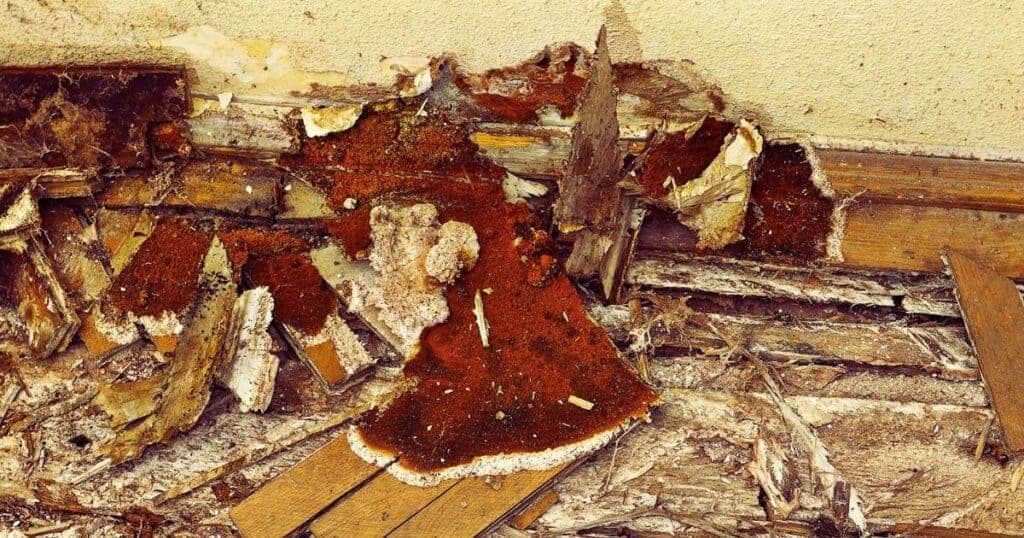
Dry rot is a wood-eating fungus called Serpula lacrymans. Looks like white cotton wool when it’s growing. Turns timber brown and crumbly. Makes it crack into cubes. Eventually reduces structural beams to powder.
The fungus needs damp timber to start. Just 20% moisture content. Then it spreads through walls, under floors, behind plaster. It can travel four metres across brickwork hunting for more wood to destroy. Spores float through the air infecting other areas.
Here’s what terrifies buyers: dry rot destroys houses. Floor joists collapse. Staircases become unsafe. Roof timbers fail. A small outbreak in one room can spread throughout the entire property in 18 months. Treatment costs £4,500 to £22,000 depending on how far it’s spread.
Buyers see “dry rot” in a survey report and they’re gone. Doesn’t matter if you’ve treated it. Doesn’t matter if you have guarantees. They’ve heard horror stories. They panic. They withdraw.
Yes. Absolutely. No way around it.
Form TA6 asks specific questions about timber decay, fungal attacks, damp problems, and remedial treatments. You tick “yes” and provide details. When it was discovered. Where it was located. What treatment you’ve done.
Lie about it? Your buyer sues you after completion. They can force you to buy the property back. They can claim damages covering treatment costs, legal fees, survey costs, and compensation for distress. Cases have resulted in sellers paying £40,000 to £80,000 in damages plus both sides’ legal costs.
Surveyors find dry rot anyway. They smell it—distinctive mushroom odour. They see cubed timber. They use moisture meters showing readings above 20%. They take photographs for the report.
You cannot hide dry rot. Don’t even consider trying.
Banks lend money secured against property. If that property has structural problems caused by fungus eating the timber, the security is worthless.
Active untreated dry rot? Mortgage application declined automatically. No negotiation. No appeal. The surveyor writes “unmortgageable in present condition” and that’s the end of it.
Treated dry rot with guarantees? Banks want proof. PCA accreditation. TrustMark certification. Insurance-backed guarantee valid for minimum 10 years. Transferable to the new owner. Detailed specifications. Before-and-after photographs with dates. Completion certificates.
Missing one piece of paperwork? Declined. Your sale collapses after eight weeks. Your buyer can’t get finance. They walk away. You start again from zero.
Even with perfect documentation, some lenders have blanket refusals. They won’t touch properties with dry rot history regardless of treatment quality. Their risk assessors say no. Your buyer needs a different lender. That takes three more weeks. Often the buyer just gives up.
Let’s talk real numbers. Not vague estimates. Actual costs you’ll pay.
Small outbreak in one room affecting floor joists and skirting boards: £3,500 to £6,200. Moderate spread across two rooms including wall timbers and door frames: £8,000 to £14,500. Severe infestation throughout ground floor with structural timber replacement: £18,000 to £28,000. Catastrophic spread requiring complete floor removal and main beam replacement: £35,000 to £55,000.
That’s just treatment. Add inspection fees of £350 to £650. Add insurance-backed guarantee of £600 to £1,400. Add redecorating of £1,200 to £4,800. Add temporary accommodation if the work makes the house uninhabitable for three weeks—another £2,400 to £3,600.
Total outlay? £7,850 to £65,850 depending on severity.
And here’s what breaks sellers: you spend all that money and buyers still demand £12,000 to £20,000 off your asking price. They’re “concerned it might come back.” Your estate agent tells you to accept because “otherwise it’ll never sell.”
You’ve paid £25,000 for treatment and lost another £15,000 in price reductions. That’s £40,000 gone.
Untreated dry rot devalues property by 25% to 45% instantly.
Your £280,000 house becomes worth £154,000 to £210,000. You’ve lost £70,000 to £126,000 because fungus is eating your floor joists. No exaggeration. That’s what buyers will pay when they know dry rot exists.
Treated dry rot with full guarantees reduces value by 12% to 25%. Buyers remain nervous. They’ve read articles about dry rot returning even after treatment. They negotiate hard. They make lowball offers expecting you to accept because “nobody else will touch it.”
Properties with disclosed dry rot sit on the market 14 to 22 months on average. Your estate agent sends weekly emails pressuring you to reduce the price. “The market is saying it’s overpriced. We need to be realistic. I recommend dropping to £215,000 to generate interest.”
You drop the price. Still no offers. You drop it again. Finally someone makes an offer at £195,000. You’ve lost £85,000 from your original asking price. Then their mortgage gets declined because the lender doesn’t accept the guarantee provider.
Estate agents take the instruction. They’re optimistic. “Dry rot is very common. Don’t worry. We sell properties with far worse problems. Just be honest in viewings.”
They list at £275,000. Beautiful photographs. Glowing description. “Charming Victorian terrace with period features and potential to extend.”
Viewings happen. Buyers love it. Three offers come in around £268,000. You accept one. Their surveyor visits. The survey report lands four days later. “Evidence of historic dry rot treatment to ground floor timbers. Further specialist inspection recommended before proceeding. Current treatment guarantee provider not recognised by all mortgage lenders.”
Your buyer requests £30,000 off the price. You negotiate to £20,000 reduction. New agreed price: £248,000. Their mortgage application goes to the lender’s surveyor. The surveyor requests additional documentation. You provide everything you have. Two weeks later: mortgage declined due to insufficient guarantee documentation.
Sale collapses. You’ve wasted 11 weeks. You relist. The property is now “back on market” which makes new buyers suspicious. The cycle repeats.
Estate agents charge 1.8% to 3% commission. On a £275,000 property, that’s £4,950 to £8,250. Add solicitor fees of £1,600. Add 18 months of holding costs at £1,520 monthly—that’s £27,360. Total: £33,910 to £37,210 spent. And you still haven’t sold.
There is no easier way to sell a house today.



Auctions accept problem properties. They’ll list yours. Legal pack includes dry rot disclosure. Buyers downloading the pack see it immediately.
Who attends? Builders. Developers. Investors. People wanting distressed assets at basement prices. They know you’re desperate. They know banks won’t lend. They bid accordingly.
A house with dry rot at auction fetches 48% to 62% of market value if it sells. Your £275,000 house hammers at £132,000 to £170,500. You’ve lost £104,500 to £143,000.
Auction fees cost 2.5% to 3.5% of hammer price. On £150,000, that’s £3,750 to £5,250. Legal pack preparation costs £850 to £1,350. Your solicitor charges £1,500. Total costs: £6,100 to £8,100.
If the property doesn’t reach reserve—which happens 40% of the time with problem properties—you’ve wasted those fees completely. You pay £2,200 in auction and legal pack fees and get nothing.
Completion timelines are fixed. Usually 28 days exactly. You don’t choose. The buyer dictates when you move out. Miss completion by one day and you pay penalties of £80 to £150 daily.
“We buy any house” companies make big promises. Fast completion. Guaranteed price. No surveys. No problems.
Then they change the offer. “Our surveyor found extensive dry rot we weren’t aware of. We need to reduce by 28%.” By that point you’ve taken the property off the market for six weeks. You’re exhausted. You accept.
Here’s how to verify they’re genuine. Go to Companies House website. Type the company name in the search box. Click on the company when it appears. Check these four things:
Look at incorporation date. Companies less than two years old are risky. No track record. No proof they’ve completed purchases. Just promises.
Examine the “charges” section. This shows money borrowed against the company. Three charges or more means they’re heavily borrowed. They don’t have cash ready. They’re arranging finance after agreeing your price—which means they’ll drop it when their lender says no.

Research directors. Click each director’s name. Look at their other companies. Are there dissolved companies? Multiple dissolved companies suggest phoenixing—deliberately closing businesses to avoid debts, complaints, or legal action.
Our company is fully transparent. Our accounts prove cash reserves. Our charges are minimal. Our directors have clean histories.
We buy at 70% of realistic valuation. Here’s the exact breakdown of where that 30% goes:
Total: 30%. We’re buying a property most buyers reject because of dry rot. We’re paying for treatment ourselves—£8,000 to £25,000. We’re holding it for 8 to 20 months whilst treatment completes and we find a buyer. We’re taking the risk that dry rot might be worse than initially visible.
You get certainty. You choose completion date. Need 10 weeks to find another property? We’ll exchange contracts now and complete when you’re ready. Need to complete in 15 days because you’re moving into rented accommodation? We’ll make it happen.
We cover a minimum of £1,500 towards your legal fees. You instruct your own solicitors—no pressure from us to use ours. Our price promise means the offer we make is what you receive. No renegotiation. No “discoveries” during inspection. No games.
Sometimes 70% feels low. You bought that house in 2008. You’ve maintained it. You’ve improved it. You want more money.
Our assisted method of sale works differently. We use our skills, expertise, and industry contacts to help you sell on the open market for a higher figure. We give you a cash advance proving our commitment. We pay marketing fees. We pay solicitor fees. We cover everything.
The assisted method of sale achieves 78% to 85% of market value instead of 70%. You receive more money. We earn a smaller margin. Everyone wins.
We handle everything. We explain the dry rot history to potential buyers. We provide documentation. We liaise with their surveyors. We negotiate when buyers request price reductions. We chase solicitors. We keep transactions moving.
If the sale falls through—which happens with dry rot properties—we still buy it ourselves at the agreed price. You’re protected. You’re not risking months of wasted effort.
Stop guessing which route saves you money—here’s what each option actually costs you when you’re selling a house being eaten by fungus.
| Method of Sale | Realistic Timeline | Actual Price You’ll Get | Chance of Completion | Who Controls Terms | Total Costs |
|---|---|---|---|---|---|
| Estate Agent | 14-22 months | 55-68% of value | Very Low (most collapse) | Buyer controls everything | £30,000 to £38,000 |
| Property Auction | 8-12 weeks | 48-62% of value | Medium (40% don’t sell) | Auctioneer dictates dates | £6,000 to £8,000 |
| Liar Cash Buyers | 8-24 weeks | 38-52% of value | Very Low (constant price drops) | They control everything | Wasted time destroying you |
| Property Saviour | 10-90 days (you decide) | 70% of value | Guaranteed | You control completion date | £0 (we pay everything) |
If you’ve treated the dry rot, you need specific paperwork to sell through traditional routes:
Missing one item kills your sale. Lenders reject incomplete documentation automatically. Buyers lose confidence. They withdraw. You’ve wasted 12 weeks.
Most sellers don’t have complete paperwork. The builder who did treatment eight years ago has closed down. The guarantee provider was bought by another company. Documents got lost during house moves. You’re trying to prove treatment happened when you can’t.
We don’t need any documentation. We buy the property as-is. Active dry rot or treated dry rot—doesn’t matter. Paperwork or no paperwork—irrelevant. We complete regardless.
Estate agents promise five to seven months. They’re lying through their teeth.
Properties with disclosed dry rot sit on the market 14 to 22 months on average. Some never sell through estate agents. The seller eventually either borrows money to treat the dry rot or accepts a catastrophic offer from a desperate investor.
During those months you’re bleeding money. Mortgage. Council tax. Buildings insurance. Utilities if you’re maintaining them. Garden maintenance so viewings don’t see an abandoned jungle.
On a £1,420 monthly mortgage with £152 council tax and £88 utilities, you’re spending £1,660 monthly. Over 18 months, that’s £29,880 in holding costs. Nearly £30,000 gone whilst you wait for a buyer who never comes.
We complete in 10 to 90 days depending on your timeline. You stop haemorrhaging money within weeks.
| Method of sale | Value achieved | Fees | Timeframe | Is sale guaranteed? |
|---|---|---|---|---|
| Estate agents | 90–95% | 1–5% | 3–6 months | No – one in three sales collapse |
| Auctioneers | 70–80% | 2% plus | 2–3 months | No – half of properties don’t sell |
| Property Saviour | 70–80% | £0 | 10–28 days | Yes – 99% success rate |
Surveyors carry professional liability. If they miss dry rot and the buyer discovers it after completion, they get sued. Their insurance pays out. Their premiums increase. Their reputation suffers.
So surveyors protect themselves with dramatic language. “Significant outbreak of Serpula lacrymans requiring immediate specialist investigation and remedial treatment. Structural integrity compromised. Do not proceed without further invasive inspection.”
That language destroys sales. Buyers read “structural integrity compromised” and imagine the house collapsing. They panic. They withdraw. They ghost your estate agent.
Even minor dry rot in a tiny area gets described apocalyptically. Surveyors recommend specialist inspections, laboratory testing, and ongoing monitoring. Buyers see those recommendations and run.
You can’t blame surveyors. They’re protecting themselves from lawsuits. But their protection kills your sale.
That becomes entirely our problem.
After completion, we instruct PCA-accredited specialists to survey the entire property. They use borescopes examining inside walls. Thermal imaging cameras detecting moisture. Moisture meters measuring timber. They find every affected area.
We remove all infected timber—joists, beams, floorboards, skirting, door frames. We treat surrounding masonry with fungicide. We improve ventilation installing air bricks and vents. We address moisture sources—leaking pipes, blocked gutters, rising damp. We replace structural timber with pre-treated timber resistant to decay.
Cost to us? £6,500 to £28,000 depending on spread. Time? 8 to 18 weeks. But you’re already gone. You’ve received your money. You’ve moved into your new home. You’re getting on with your life.
The dry rot is our financial burden. Our project management headache. Our risk.
Let’s work through real numbers. Your property would be worth £265,000 without the dry rot problem.
You receive £59,500 more than the estate agent route. You receive £49,164 more than auction. You receive the money in weeks instead of years.
The maths is brutal. We’re the only financially sensible choice.
We buy properties with multiple problems simultaneously.
Dry rot plus subsidence? We’ll buy it. Dry rot plus Japanese knotweed? We’ll buy it. Dry rot plus boundary dispute plus sitting tenant refusing to leave? We’ll still buy it.
Each problem reduces the valuation. We’re transparent about the impact. Subsidence repair costs £8,000 to £45,000—that reduces our offer accordingly. Japanese knotweed treatment costs £2,500 to £9,000—that comes off too. Boundary disputes reduce value by 15% to 25%—we factor that in.
But we still buy. We still complete quickly. We still give you certainty.
Other buyers see one problem and walk away. They see two problems and they run. We specialise in properties nobody else wants. That’s our business model.
You didn’t cause this dry rot. Maybe the previous owner had a leak they ignored. Maybe the builder in 1972 used untreated timber. Maybe the property has always had poor ventilation and nobody addressed it.
Doesn’t matter whose fault it is. You’re the one suffering now. You’re the one unable to sell. You’re the one watching mortgage payments drain your savings. You’re the one seeing buyers withdraw after surveys. You’re the one trapped.
That ends today. This hour. Right now.
We buy houses with dry rot. Active fungal growth or historic treatment. Documentation or no documentation. We complete fast. We cover your legal fees. You choose the completion date. No treatment required from you. No price drops. No renegotiation.
Stop losing money. Stop wasting time with estate agents who can’t sell it. Stop hoping for buyers who’ll never complete.
Call us today. Request a callback. Get your offer within 24 hours of us seeing the property.
We’ll ask about the dry rot. Where it is. When you discovered it. Whether it’s been treated. What documentation you have. We’ll give you an honest offer based on realistic valuation—not fantasy prices designed to win your business then disappear.
You’ll know exactly what you’re receiving. You’ll know exactly when completion happens. You’ll know you’re working with a legitimate company that’s completed 340 purchases since 2019.
We’ve helped sellers escape every property nightmare imaginable. Dry rot. Wet rot. Subsidence. Japanese knotweed. Structural movement. Fire damage. Flood damage. Former cannabis farms. Properties needing £95,000 of repairs. We’ve bought them all.
Request your callback now. Get your offer tomorrow. Sell your house with dry rot and move forward with your life.

Whether you’re facing a tricky sale, navigating probate, or simply looking to sell fast without hassle, you’re in the right place. Our blog is packed with practical advice, expert insights, and real-life tips to help homeowners, landlords, and executors across England, Scotland and Wales make informed decisions — whatever the condition of their property.