Sell House Fast Bristol
Bristol holds a title most sellers have never heard of and estate agents rarely mention: it’s England’s Japanese knotweed capital. Analysis by invasive species specialist Environet identif...
A fire-damaged house is a trap. The longer it sits, the more it costs you. Repairs run past £35,000, estate agents won't touch it, and no ordinary buyer can get a mortgage on it, so the open market drags on for a year while your price gets chipped away. The way out is simpler than anyone with a stake in your misery will admit: sell it as-is for cash, keep your insurance settlement, and walk away with money in the bank instead of a burnt shell you can't insure or sell. Property Saviour buy fire-damaged houses in any condition, severe burns, smoke damage, even gutted shells and leasehold flats, with a formal cash offer in 48 hours, completion in as little as 10 days, and £1,500 towards your legal fees. No repairs, no chain, no fees. The fire that was supposed to ruin you becomes the moment you finally got free.
If you need to sell a fire damaged house, you do not necessarily have to repair it first. Property Saviour buys fire-damaged homes in their current condition, including properties with smoke damage, structural damage and more severe fire damage.
For many owners, the difficult part is deciding whether to repair, use a traditional estate agent, go to auction or sell directly to a cash buyer. Each route has a different balance of cost, time and certainty, so it is worth understanding the options before spending money on restoration.
Property Saviour’s current service offers a formal cash offer within 48 hours and completion in as little as 10 days where the legal work allows. You choose the completion date, and Property Saviour contributes £1,500 towards your legal fees.
If the fire has only just happened and you are still working out what to do next, our guide to what happens after a house fire covers the immediate practical questions. This page focuses on the options available when you are ready to sell the property.
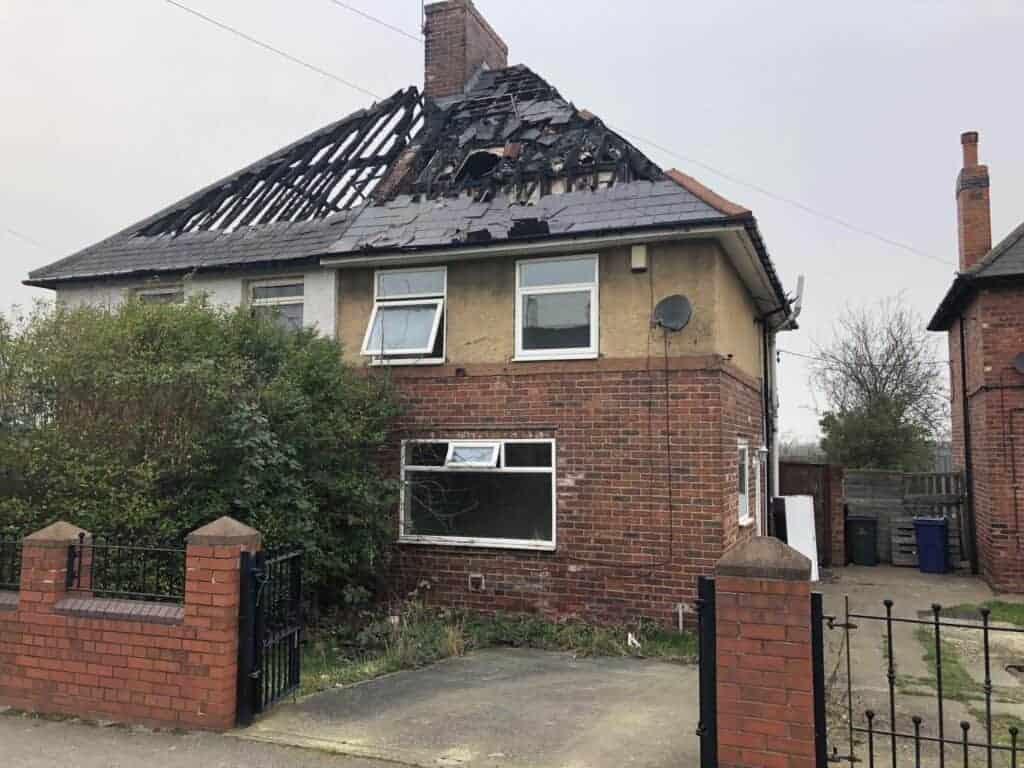
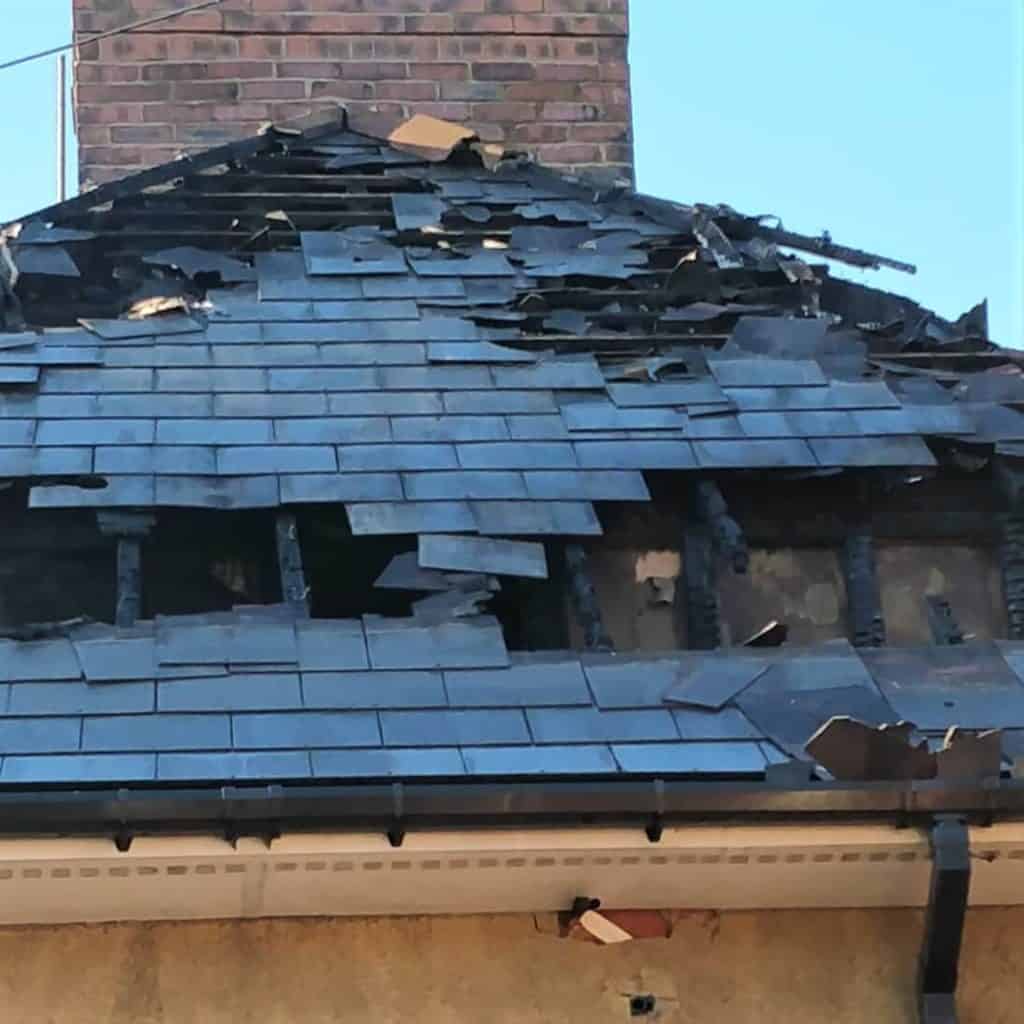
Yes. You can sell a fire-damaged property in its current condition rather than restoring it before the sale. That can include anything from smoke damage and water damage caused during firefighting through to more serious structural issues or a property that has been stripped back to a shell.
Property Saviour assesses the extent of the damage, the property’s location and what it would realistically be worth in its repaired condition before making a cash offer. You do not need to redecorate, clean away soot or make the house presentable before asking us to look at it.
If fire damage has made the property difficult to finance, our guide to selling an unmortgageable house explains why a cash buyer can sometimes be a more practical option than waiting for a mortgage-dependent buyer.
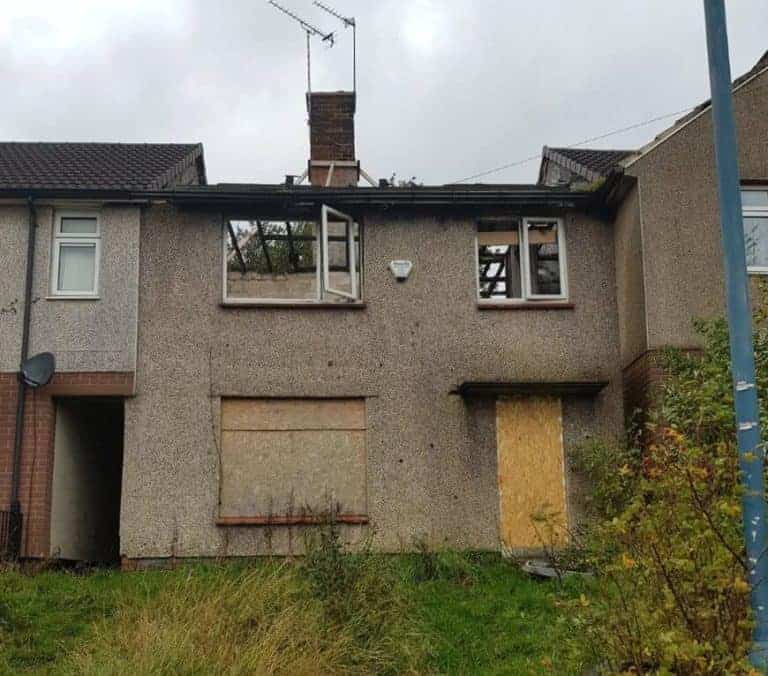
If you are deciding how to sell a fire damaged property in the UK, there are three main routes to consider.
This may be worth considering if you have the time and money to complete the work and your main priority is achieving the highest possible open-market price. The downside is that you take on the restoration work before you know what potential buyers will eventually offer.
The original information for this property also highlights another issue: mortgage lenders can be cautious around fire-damaged homes, particularly where structural damage remains unresolved. That can reduce the pool of buyers until the property has been repaired.
Property auctions can attract investors who are comfortable buying distressed properties and carrying out major work. However, there are auction fees to consider and the sale still depends on bidding reaching your reserve price.
If you are comparing the two routes, our house auction guide explains how guide prices, reserves, fees and completion work.
Specialist fire damaged house buyers can purchase without relying on a residential mortgage. Property Saviour buys directly for cash, so you do not have to restore the property first or wait for a buyer’s mortgage application.
The trade-off is price. A cash buyer needs to account for the condition of the property, the restoration work and the costs of holding and reselling it. A direct sale is therefore more suited to owners who value speed and certainty over testing the market for the maximum possible price.
There is no single figure because every fire is different. The value depends on where the property is, what it would be worth in good condition and the extent of the fire, smoke and structural damage.
Property Saviour’s approach is to look at the realistic repaired value and the work required before making an offer. The existing example on this page uses a home worth £250,000 before the fire that needs £100,000 of restoration work. That gives a damaged value of £150,000, with the example Property Saviour offer shown as £105,000.
The important point is to compare any cash offer with the real alternative available to you, including repair costs, the time involved and what the property could realistically achieve once restored.
If you need to sell a fire damaged house fast, Property Saviour can provide a formal cash offer within 48 hours of receiving the property details and can complete in as little as 10 days where the legal process allows.
You do not have to choose the fastest completion. If you need longer because of an insurance claim, temporary accommodation or another personal reason, the completion date can be arranged around your circumstances.
There is no easier way to sell a house today.



The process is designed to be straightforward, particularly when you are already dealing with the aftermath of a fire.
If you want to understand the wider cash buying process before making a decision, see our guide to selling a house for cash.
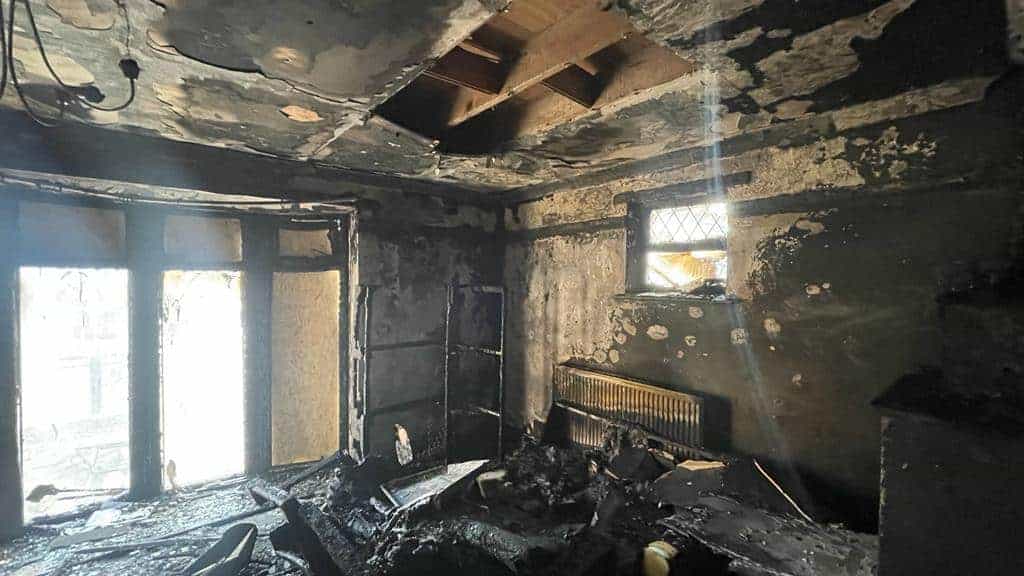
No. Property Saviour buys fire damaged homes as they stand. That includes smoke-blackened walls, soot, water damage caused during firefighting and properties that need major restoration.
Fire cleanup can also involve risks that are easy to underestimate. Soot, smoke residue and water damage can make professional protective equipment and specialist restoration work necessary. If you are unsure whether an area is safe to enter, take professional advice rather than attempting a major clean-up yourself.
If you are weighing up restoration against selling, the calculator below can help you estimate what the repair work could cost before you decide.
Enter the size, age, location and severity of the damage to get an estimated restoration cost. The result is a rough guide rather than a property valuation or building quotation.
Use the result as a starting point when comparing restoration with selling the property as it stands. A proper assessment is still needed before committing to repairs or accepting an offer.
Often, yes, but speak to your insurer and check the terms of your policy before agreeing a sale. An open insurance claim can affect how and when the property is sold, so it is important to understand what happens to the claim proceeds if ownership changes.
The existing Property Saviour service is designed to work around an ongoing insurance claim rather than requiring you to wait for every part of the claim to finish first. Your insurer or solicitor should confirm how this applies to your particular policy.
| Method of sale | Value achieved | Fees | Timeframe | Is sale guaranteed? |
|---|---|---|---|---|
| Estate agents | 90–95% | 1–5% | 3–6 months | No – one in three sales collapse |
| Auctioneers | 70–80% | 2% plus | 2–3 months | No – half of properties don’t sell |
| Property Saviour | 70–80% | £0 | 10–28 days | Yes – 99% success rate |
Yes. Property Saviour buys properties with light smoke damage, severe fire damage and homes that have been stripped back to a shell. Leasehold flats can also be considered, including situations where the freeholder, buildings insurance and other leaseholders add extra complexity.
Those issues can make a sale harder through a traditional estate agent, but they do not automatically prevent a direct cash purchase.
Before accepting an offer from any property buyer, check the company rather than relying on the website or phone call alone. Companies House lets you review how long the business has been trading, its filed accounts and any charges registered against it.
You can also ask for proof of funds and clarify whether the company is buying the property directly or relying on another buyer or source of finance to complete.
Our guide to checking a genuine cash house buyer covers the main checks in more detail.

The right choice depends on what matters most to you.
There is no need to decide based on pressure. Compare the likely net result, timescale and work involved in each route, and choose the option that best fits your circumstances.
If you want a free, no-obligation conversation about selling a fire-damaged property, tell Property Saviour what happened, the condition of the house and where you are with the insurance claim.
You can send photographs, receive a formal cash offer and decide whether it is right for you. There is no need to repair or clean the property before getting in touch.
Request a callback to discuss your fire damaged house and the options available.

Whether you’re facing a tricky sale, navigating probate, or simply looking to sell fast without hassle, you’re in the right place. Our blog is packed with practical advice, expert insights, and real-life tips to help homeowners, landlords, and executors across England, Scotland and Wales make informed decisions — whatever the condition of their property.