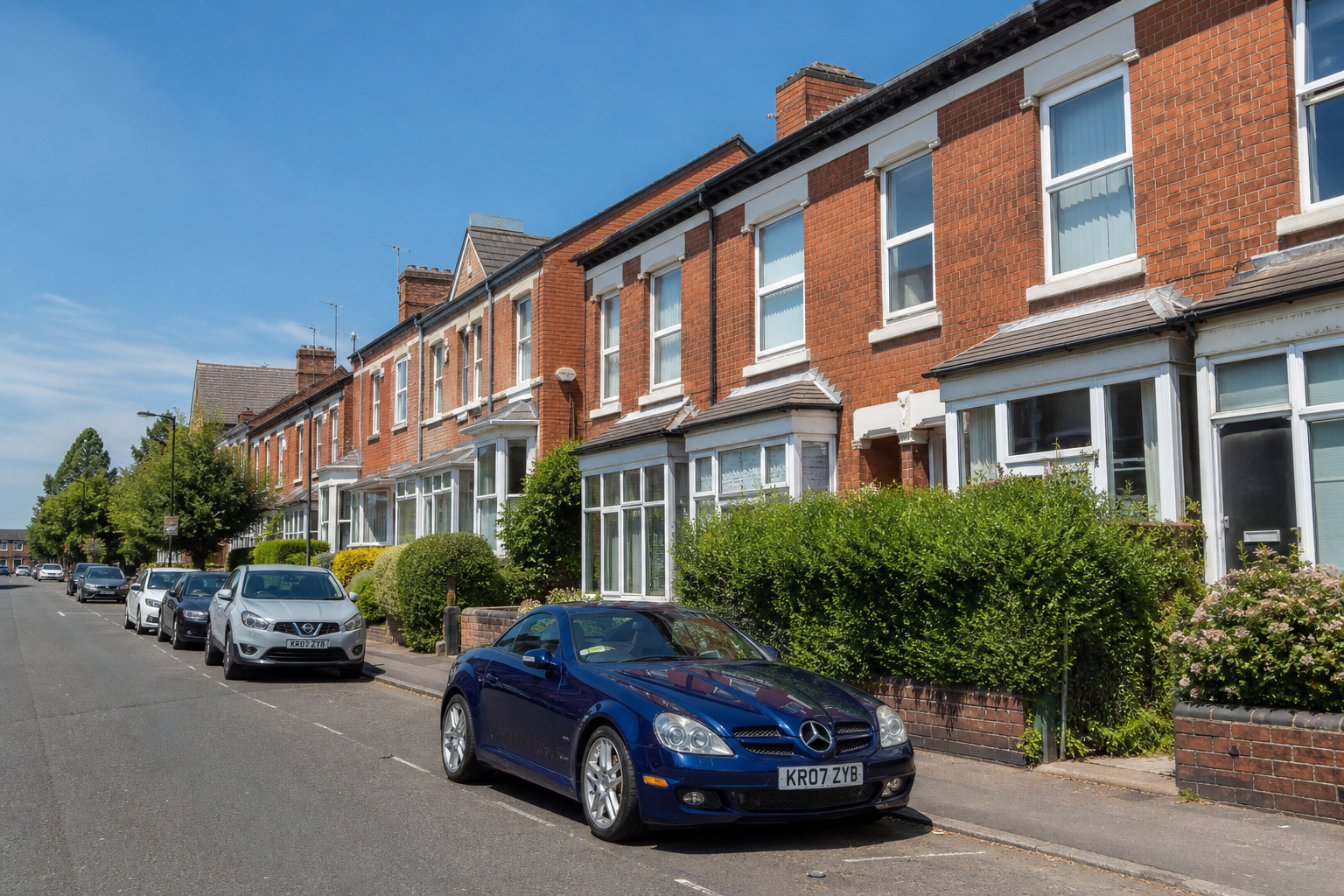
Sell House Fast Bristol
Bristol holds a title most sellers have never heard of and estate agents rarely mention: it’s England’s Japanese knotweed capital. Analysis by invasive species specialist Environet identif...
Selling a house with possessory title is like trying to offload a car with no MOT - mortgage lenders shy away and buyers get twitchy because there's no solid proof of ownership. Possessory title signals a legal grey area, often arising from lost deeds or historic informal sales, making buyers wary and driving down value by up to 40% compared to homes with absolute titles.
Selling a house with possessory title is the nightmare situation you face after discovering your property has the weakest class of legal title that mortgage lenders refuse and buyers fear.
Possessory title means Land Registry granted registration based on your possession of the property rather than full documentary evidence of ownership such as original title deeds. Your ownership can be challenged and set aside if someone produces better evidence.
Most mortgage lenders categorically refuse possessory title properties eliminating 90% of potential buyers. Properties sell for 20% to 40% below equivalent absolute title houses if they sell at all. Estate agents cannot overcome these fundamental legal obstacles. We understand the shock and fear you are experiencing because we specialise in purchasing legally complex properties that conventional buyers reject.
Possessory title is one of four classes of title that Land Registry can grant when registering property. The four classes rank from strongest to weakest: absolute freehold title, qualified title, good leasehold title, and possessory title.
Absolute title is the best class guaranteeing the registered owner has undisputed right to the property with full legal protection. This is what 95% of properties in England and Wales possess. Buyers expect it. Mortgage lenders require it.
Qualified title is rare and granted when there is a specific defect in the title that Land Registry notes on the register. The qualification limits the guarantee Land Registry provides. Few properties carry this classification.
Good leasehold title is the leasehold equivalent of absolute title granted when the landlord’s freehold title cannot be investigated. This is common for leasehold flats and causes minimal concern.
Possessory title is the weakest class granted when the applicant cannot produce full documentary evidence of ownership. Land Registry recognises your possession of the property but makes no guarantee about the validity of that ownership. This creates severe marketability problems.
Several scenarios lead to possessory title registration and none suggest fraud or wrongdoing but all create legal uncertainty affecting sale prospects.
Original title deeds were lost, destroyed, or stolen. House fires consume documents stored in lofts or studies. Floods destroy paperwork kept in basements. Solicitors go bankrupt and client files disappear. Elderly relatives lose deeds during house moves. Without the original chain of ownership documents Land Registry grants possessory title based on your statutory declaration of ownership and possession.
Long periods of adverse possession where someone occupied land without formal transfer create possessory title applications. Perhaps your family used land adjoining your garden for 30 years treating it as your own. When you apply to register that land based on adverse possession Land Registry grants possessory title recognising your occupation whilst acknowledging the lack of formal transfer documents.
Informal property transfers decades ago without proper legal involvement create documentary gaps. Property passed between family members through handshake agreements or simple written notes rather than solicitor drafted transfers. When you try to sell you discover the paper trail is incomplete or missing entirely forcing possessory title application.
Historical property developer bankruptcies where files were destroyed mean houses sold in the 1970s or 1980s have no traceable ownership chain. The deeds vanished when the developer went under. Current owners possess the property but cannot prove the full legal chain.
Two devastating differences separate possessory title from absolute title and both terrify potential buyers.
First possessory title can be challenged and set aside. If someone appears with original title deeds or documentary evidence proving their ownership claim is stronger than your possessory title they can apply to Land Registry. If Land Registry accepts their evidence your possessory title is revoked. You lose ownership of the property entirely. Any money you invested in purchase, improvements, or extensions is lost. You have no automatic right to compensation. Whilst statistically uncommon this risk is legally real and insurers charge premiums reflecting it.
Second possessory title is granted subject to all estates, rights, and interests existing at the date of first registration. Translation: any covenants, restrictions, rights of way, or third party rights that existed in the original unproduced deeds remain enforceable against the property even though you know nothing about them. You might discover you cannot build an extension because restrictive covenants prevent it. Someone might claim a right of way across your garden based on historical agreements you never saw. The hidden legal obligations create unlimited liability.
Absolute title provides State guarantee that you own the property free from undisclosed interests. Possessory title provides no such protection. This fundamental legal vulnerability makes the property unmarketable to anyone requiring mortgage finance or valuing legal certainty.

Most mainstream mortgage lenders including Nationwide, Halifax, Santander, Barclays, and HSBC categorically refuse to lend on possessory title properties regardless of the borrower’s creditworthiness or deposit size.
Lenders view possessory title as unacceptable security. They fear ownership challenges could invalidate their charge over the property. If your ownership is successfully challenged and revoked the lender’s mortgage becomes worthless. They cannot repossess and sell property where ownership itself is disputed. The legal uncertainty creates unacceptable risk to their loan book.
Specialist lenders who do consider possessory title properties are rare and impose punitive conditions. Maximum loan to value ratios reach 75% meaning buyers need 25% deposits minimum. Interest rates run 1% to 2% above standard mortgage rates adding thousands in lifetime costs. Arrangement fees increase to cover additional legal scrutiny.
Most critically these specialist lenders require possessory title indemnity insurance as a mandatory lending condition. The buyer must purchase and maintain this insurance for the entire mortgage term. If the insurance lapses or claims are denied the mortgage becomes immediately repayable. This insurance requirement adds hundreds in upfront cost plus ongoing premium obligations.
The combination of high deposits, expensive rates, and insurance requirements eliminates 90% of potential buyers from your market. First time buyers cannot raise 25% deposits. Most families cannot afford interest premiums. The buyer pool shrinks to cash purchasers or the tiny segment able to access specialist lending. Your property becomes functionally unmarketable.
Buyers purchasing possessory title properties must obtain possessory title indemnity insurance protecting against future ownership challenges and undiscovered covenants or restrictions affecting use.
For residential properties valued under £300,000 indemnity insurance costs £300 to £500 as a one off premium. Properties valued at £300,000 to £500,000 see premiums of £500 to £800. Properties exceeding £500,000 pay £800 to £1,200 or more depending on circumstances and insurer appetite.
The insurance covers financial loss if ownership is successfully challenged or hidden restrictions prevent intended use. However policies contain significant exclusions that reduce their value. Cover is refused if the buyer contacts potential claimants before purchasing the insurance. Claims are denied if the challenging party or restrictive covenant was known when the policy was purchased. The insurance protects against unknown risks only.
More concerning the insurance provides financial compensation not legal certainty. You might win a payout if you lose the house but you still lose the house. The trauma of legal disputes, eviction proceedings, and relocating your family cannot be insured. Buyers seeking homes for their families refuse to accept this vulnerability regardless of insurance availability.
The upfront cost of £300 to £800 adds to buyer expenses on top of surveys, legal fees, and stamp duty. Cash strapped buyers baulk at this additional requirement particularly when comparable absolute title properties down the street require no such insurance. The cost barrier eliminates marginal buyers who might otherwise consider your property.
The nightmare scenario keeps potential buyers awake and explains why properties with possessory title sit unsold for years.
Someone appears claiming ownership or superior rights to your property. Perhaps they are descendants of the original owner before adverse possession. Maybe they hold original title deeds showing a transfer that contradicts your ownership. Possibly they possess historical documents proving a covenant or restriction you violated.
They apply to Land Registry presenting their documentary evidence. Land Registry reviews the competing claims. If they determine the challenger’s evidence is superior to your possessory title registration your title is revoked. Your name is removed from the register. The challenger is registered as owner instead.
You lose the property immediately. Any mortgage you hold becomes your personal debt without security. Any improvements, extensions, or renovations you funded benefit the new owner not you. Any emotional attachment to the family home is irrelevant. The legal system recognises superior documentary evidence over possessory occupation.
Your only recourse is claiming against the possessory title indemnity insurance if you purchased it. The insurer investigates whether the claim falls within policy terms. Many claims are denied based on policy exclusions. Even successful claims provide money not the home you loved and lost.
Whilst ownership challenges are statistically uncommon the legal possibility is real. Buyers refuse to accept this existential risk to their home ownership and family security. Properties with possessory title trade at massive discounts reflecting this fundamental vulnerability or do not trade at all.
Possessory title can be upgraded to absolute title after 12 years of continuous undisputed registration provided no challenges or claims arose during that period.
The upgrade process requires the registered owner to complete a statutory declaration confirming that no person has disputed their title, raised objections, or claimed adverse rights during the 12 year period since first registration. This declaration must be witnessed by a solicitor or commissioner for oaths.
The owner then applies to Land Registry for upgrade to absolute title submitting the statutory declaration plus the application fee currently £40. Land Registry reviews the application and supporting evidence. If satisfied they upgrade the title class from possessory to absolute removing the legal vulnerability.
However several problems limit the value of this upgrade path for sellers needing to sell now. First many sellers discover possessory title only when attempting to sell meaning the 12 year qualifying period has not elapsed. They cannot wait another 8 or 10 years to sell whilst accumulating holding costs and life remaining on pause.
Second even after upgrade to absolute title the historical possessory title status affects buyer and lender perception. Mortgage underwriters see the title history showing original possessory registration. Some lenders remain cautious. Buyers question why the property ever had possessory title wondering what problems existed. The stigma persists despite technical upgrade.
Third the upgrade only addresses future challenges. It does not retrospectively validate past ownership or eliminate historic covenants and restrictions that bound the property during the possessory title period. Unknown obligations that accumulated during those 12 years remain enforceable creating ongoing legal uncertainty.
The 12 year wait is unrealistic for sellers facing urgent relocation, probate deadlines, financial pressure, or relationship breakdown. Immediate sale becomes essential making the upgrade path irrelevant however technically available.
Possessory title properties sell for 20% to 40% below equivalent absolute title properties in identical locations with comparable specifications.
A three bedroom semi detached house with absolute title valued at £300,000 achieves only £180,000 to £240,000 if it carries possessory title. A four bedroom detached house worth £500,000 with absolute title sells for £300,000 to £400,000 with possessory title. The reduction is not negotiation leverage or seller desperation but genuine market reality.
This value destruction reflects the structural limitations possessory title creates. The buyer pool shrinks by 90% when mortgage lenders refuse the property. The remaining cash buyers demand discounts compensating for legal risk, future resale difficulty, and indemnity insurance costs. Supply and demand economics dictate that severely limited demand creates correspondingly reduced prices.
Estate agents struggle to accept this reality initially pricing possessory title properties at absolute title levels. They believe compelling marketing, professional photography, or better descriptions will overcome buyer reluctance. Six months later after zero offers they suggest modest reductions of 5% to 10%. After 12 months desperation sets in and sellers slash prices to 25% to 35% below comparable absolute title properties finally attracting the handful of cash buyers willing to consider possessory title.
The cumulative effect of prolonged marketing and eventual price capitulation often leaves sellers netting 30% to 45% below what absolute title neighbours achieved. Add 12 to 24 months of council tax, insurance, utilities, and maintenance during the marketing period plus estate agent fees of 1% to 3% and the financial devastation is complete.
Sellers feel betrayed discovering property they believed worth £400,000 achieves £220,000 after two years of marketing failure. The possessory title status destroyed value they assumed they possessed. This painful education comes too late to change the fundamental legal position.
There is no easier way to sell a house today.



Estate agents possess no special expertise, legal knowledge, or marketing strategies for selling possessory title properties. They list them on property portals with standard descriptions then watch them accumulate days on market.
Their databases contain virtually zero buyers specifically seeking possessory title properties. Most buyers filter for detached or semi detached, search by price range and location, then expect absolute title as standard. The possessory title classification appears buried in legal documents buyers only see at conveyancing stage weeks after viewing.
Viewings proceed normally until buyer solicitors review title documents and discover possessory status. They explain the mortgage difficulties, legal risks, and insurance requirements. The buyer withdraws immediately or submits an offer 30% to 40% below asking price reflecting the title defect. Sellers feel devastated watching apparently keen buyers evaporate upon legal review.
Estate agents cannot make mortgage lenders accept what their risk departments classify as unacceptable security. They cannot eliminate the legal vulnerability that terrifies buyers. They cannot create demand for a property type the market systematically rejects. Their value proposition of marketing, viewings, and negotiations becomes worthless when the fundamental product is unmarketable.
After six months agents lose interest and enthusiasm. Your property becomes a problem listing contributing zero to their monthly targets. Accompanied viewings cease. Communication dwindles. They focus energy on properties that actually sell whilst yours languishes forgotten on their books.
When sale finally completes after 18 to 24 months at prices 30% to 40% below initial asking agents still charge 1% to 3% plus VAT commission. On a £200,000 eventual sale price this means paying £2,400 to £7,200 for years of failure that delivered minimal value beyond portal listing. The fee feels particularly unjust given the agent’s inability to overcome the title obstacle.
Sellers desperate after estate agent failure sometimes consider auctioning a house or auctioning a property believing competitive bidding might achieve better results than prolonged private marketing.
Property auctioneers accept possessory title properties but warn that legal title defects achieve catastrophically low prices. Auction buyers are predominantly investors and cash purchasers who understand property law. They recognise possessory title creates 20% to 40% value reduction before considering any investor margin.
Bidders calculate the realistic absolute title value, apply the 20% to 40% possessory title discount, then deduct a further 20% to 30% for their profit margin and resale difficulty. A property worth £300,000 with absolute title is worth £180,000 to £240,000 with possessory title to end users. Investors bid £126,000 to £168,000 allowing their resale margin. The compounding discounts destroy seller value.
Catalogue fees of £500 to £3,000 come off proceeds regardless of sale success. Legal pack preparation costs another £300 to £800. If bidding fails to reach your reserve you pay these fees whilst retaining an unsold possessory title property and facing another marketing attempt. Multiple auction failures compound these losses.
The 28 day completion deadline following hammer fall creates time pressure but offers no solution to fundamental unmarketability. Auctions do not magically create buyers willing to accept possessory title. They simply force existing cash buyers to bid at prices reflecting massive combined discounts for title defect plus investor profit.
Sellers escape prolonged marketing but sacrifice 40% to 60% of absolute title value in the process. The speed comes at ruinous financial cost making auctions suitable only for sellers accepting total value destruction in exchange for immediate exit.
The property buying sector attracts dishonest buyers who specifically target vulnerable sellers of legally defective properties including those with possessory title.
These companies claiming to be cash home buyers advertise that they purchase any property regardless of legal issues. They make encouraging initial offers perhaps at 60% to 65% of absolute title value. This feels reasonable given your awareness that possessory title reduces value. You commit emotionally to selling, stop other marketing efforts, and wait for completion.
Weeks pass whilst they conduct surveys and legal reviews. Then they present drastically reduced offers claiming the possessory title risks are worse than initially understood. The new offer drops to 40% to 50% of absolute title value or 50% to 65% below the original offer they made. They explain that their legal team insists on this reduction. The timing is calculated to exploit your sunk cost and desperation.
Other dishonest we buy any house companies promise to handle all legal complications and insurance requirements as part of their service. Then days before completion they demand you purchase the £300 to £500 indemnity insurance contradicting their initial commitment. They claim this was always expected and misunderstanding is your fault. You pay the insurance cost from proceeds reducing net amounts further.
The manipulation succeeds because possessory title sellers feel desperate and isolated. You have experienced mortgage lender refusals and buyer withdrawals. Estate agents proved useless. You believe no legitimate buyer will purchase your legal problem. These companies exploit this vulnerability through false promises followed by systematic reduction.
Protecting yourself requires five minutes of due diligence revealing whether a company operates from genuine capital or borrowed funds creating pressure to reduce offers.

Authentic cash house buying companies like us maintain clean balance sheets with minimal charges because we purchase properties using our own capital reserves held specifically for complex purchases. We actively encourage every seller to complete this verification check. Our financial transparency reflects the honest dealing that defines every transaction we complete.
When we make an offer that figure remains absolutely fixed from initial conversation through to completion. No surveys justify reductions. No legal reviews create renegotiation. No last minute discoveries change terms. The price we offer is the price you receive because we assess possessory title risks accurately from the start building them into our pricing not discovering them halfway through.
We have built our business purchasing property types that conventional buyers and mortgage dependent purchasers systematically reject. Possessory title properties represent exactly the legal complexity we understand and price for transparently.
We recognise that possessory title creates genuine value reduction of 20% to 40% below absolute title equivalents. This is not temporary market condition or agent incompetence but permanent structural limitation. Our pricing reflects this reality from day one rather than pretending otherwise then slashing offers later.
We purchase knowing we face extended resale timelines of 12 to 24 months finding the rare cash buyer willing to accept possessory title. We budget for holding costs during this period. We account for indemnity insurance costs we must provide buyers. We factor in specialist legal fees reviewing title defects. All these costs are built into our pricing model not discovered during transaction and used to justify reductions.
We buy properties at 70% of their realistic market valuation. For possessory title properties this means 70% of the already reduced value that possessory title properties achieve in the market not 70% of inflated absolute title comparables. This distinction matters enormously.
Here is exactly where that 30% discount is allocated across our business model when purchasing possessory title properties.
This pricing model is completely transparent. We assess your property’s realistic value as a possessory title property not as an absolute title property. If comparable absolute title houses sell for £300,000 we acknowledge your possessory title house is realistically worth £180,000 to £240,000 depending on specifics. Our offer of 70% calculates against that realistic £180,000 to £240,000 not the £300,000 absolute title figure.
We also purchase other legally complex situations including cases where sellers need to sell inherited house properties discovering possessory title during probate creating impossible complications for executors. We handle situations where sellers must sell fire damaged house properties that also carry possessory title compounding two unmarketability issues simultaneously. Every complex scenario receives the same commitment to immediate certain purchase.
Understanding the true timeline, buyer pool, and achievable price for each method of sale helps you make informed decisions about escaping possessory title unmarketability.
| Feature | Selling via Estate Agent | Auction | Liar Cash Buyer | Property Saviour |
|---|---|---|---|---|
| Mortgage Buyer Pool | None lenders refuse possessory | None cash buyers only | None single manipulative buyer | None but we are the buyer |
| Sale Timeline | 12 to 24 months extreme delay | 28 days post auction | Promised quick then delayed | 7 to 28 days your choice |
| Price Achieved | 30% to 40% below absolute after cuts | 40% to 60% below absolute | 50% to 65% below after manipulation | 70% of realistic possessory value |
| Certainty Level | Zero years of uncertainty | Low reserve might not meet | False promises then reductions | Absolute guaranteed completion |
| Legal Complexity | Agent has no expertise | Auction legal pack required | Buyer exploits your complexity | We specialise in title defects |
The comparison demonstrates why we are the only realistic option for possessory title properties providing immediate certain purchase whilst estate agents deliver years of failure and auctions force value destruction.
Consider Diane who inherited her late father’s three bedroom semi detached house in Reading following his death in 2024. During probate her solicitor discovered the property carried possessory title rather than absolute title. Diane’s father had purchased the house in 1978 from a property developer who subsequently went bankrupt. The original title deeds vanished when the developer’s files were destroyed.
Her father had lived in the property for 46 years without issue. He registered possessory title with Land Registry in 1982 based on statutory declaration and his continuous occupation. The 12 year upgrade period had long passed but he never applied for upgrade to absolute title seeing no reason as he intended to remain in the house until death.
Diane needed to sell the inherited property to distribute the estate between three siblings. She listed with a local estate agent in March 2024 who initially seemed confident pricing at £285,000 based on recent sales of comparable absolute title properties in the street.
The first viewing went well. The couple loved the house and submitted an offer at £280,000. Diane accepted thrilled at the quick result. Two weeks later the buyer’s solicitor identified the possessory title during legal review. The mortgage lender refused the application entirely. The buyer withdrew devastated.
The second offer at £275,000 followed the same pattern. The buyer’s mortgage application was declined due to possessory title. Another withdrawal. Diane began to understand the severity of her problem.
Over eight months Diane experienced nine viewings resulting in four offers. Every offer collapsed when mortgage lenders refused possessory title. Two cash buyers made offers but both were at £175,000 and £165,000 representing 39% to 42% below asking price. Diane rejected both feeling insulted.
The estate agent suggested reducing to £245,000 in November 2024 to attract more interest. Three more viewings over December produced zero offers. Diane entered 2025 having paid 10 months of council tax, insurance, utilities, and maintenance on the empty inherited property totalling £4,200. Her siblings grew frustrated at the delay in estate distribution. Family tensions increased.
In January 2025 Diane received another offer at £170,000 from a cash buyer. She felt devastated. The estate agent would charge £8,550 at 3% commission leaving £161,450 net. This represented 43% below the original £285,000 asking price and barely more than the £165,000 offer she had rejected 11 months earlier.
Diane contacted us after reading about possessory title challenges. We explained that her property in perfect condition would be worth £285,000 with absolute title. However with possessory title the realistic market value was £170,000 to £210,000 reflecting the 20% to 40% reduction possessory title properties experience.
We offered £133,000 representing 70% of the midpoint realistic possessory title valuation of £190,000. We completed in three weeks with no estate agent fees. Diane netted £133,000 in hand after 11 months of estate agent failure.
Her alternative was accepting the £170,000 cash buyer offer. Deducting £5,100 estate agent fee at 3% would leave £164,900. The comparison between our immediate certain £133,000 and the uncertain future £164,900 showed a £31,900 gap.
However Diane would need to continue paying council tax, insurance, and utilities for another two to three months minimum during legal process adding £1,200 to £1,800 in costs. The risk remained that this buyer would also withdraw or reduce their offer as previous buyers had. The emotional stress of continued uncertainty whilst managing probate and sibling expectations was destroying Diane’s wellbeing.
Diane chose our certain immediate purchase. She divided the £133,000 between three siblings ending probate within weeks. The certainty allowed her to grieve properly rather than managing endless viewings and buyer disappointments. She told us later that discovering possessory title had been the most shocking aspect of her father’s death creating problems she never imagined existed.
Yes you can sell a house with possessory title but it is exceptionally difficult and achieves 20% to 40% less than absolute title equivalents. Most mortgage lenders categorically refuse to lend on possessory title properties eliminating 90% of potential buyers. Specialist lenders who consider them impose maximum 75% loan to value ratios, charge interest rates 1% to 2% higher, and require expensive indemnity insurance as a lending condition.
Absolute title guarantees the registered owner has undisputed right to the property with full legal protection from Land Registry. Possessory title can be challenged and set aside if someone produces better documentary evidence of ownership. Possessory title is subject to unknown covenants and restrictions existing in unproduced original deeds. Absolute title is the strongest class whilst possessory is the weakest.
| Method of sale | Value achieved | Fees | Timeframe | Is sale guaranteed? |
|---|---|---|---|---|
| Estate agents | 90–95% | 1–5% | 3–6 months | No – one in three sales collapse |
| Auctioneers | 70–80% | 2% plus | 2–3 months | No – half of properties don’t sell |
| Property Saviour | 70–80% | £0 | 10–28 days | Yes – 99% success rate |
Most mainstream mortgage lenders including Nationwide, Halifax, Santander, Barclays, and HSBC refuse possessory title properties. Rare specialist lenders who consider them impose maximum 75% loan to value ratios requiring 25% deposits, charge interest rates 1% to 2% higher than standard mortgages, and require possessory title indemnity insurance costing £300 to £500 plus as mandatory lending condition.
Possessory title can be upgraded to absolute title after 12 years of continuous undisputed registration. The owner must provide a statutory declaration confirming no challenges occurred during the 12 years and apply to Land Registry paying £40 fee. Upgrade is not automatic and requires legal costs. Many sellers cannot wait 12 years when they need to sell immediately.
Yes possessory title can be challenged by anyone who proves a stronger legal claim to the property through documentary evidence such as original title deeds or historical ownership documents. If Land Registry accepts the challenger’s evidence the possessory title is revoked. The possessory title owner loses the property and any money invested without automatic right to compensation.
Possessory title indemnity insurance costs £300 to £500 for residential properties under £300,000. Properties valued at £300,000 to £500,000 see premiums of £500 to £800. Properties exceeding £500,000 pay £800 to £1,200 or more. The insurance covers financial loss if ownership is successfully challenged but not the legal trauma or stress of disputes.
Properties have possessory title when original deeds were lost, destroyed, or stolen in fires floods or solicitor bankruptcies, when claimed through adverse possession after long occupation, when historical family transfers lacked proper legal documentation, or when property developers went bankrupt and files vanished. Land Registry grants possessory title recognising possession whilst acknowledging incomplete documentary evidence.
Possessory title properties are worth 20% to 40% less than equivalent absolute title properties in identical locations. A £300,000 absolute title house sells for £180,000 to £240,000 with possessory title. The reduction reflects mortgage lender refusal, severely limited buyer pool, legal uncertainty, expensive insurance requirements, and future resale difficulty creating genuine structural value destruction.
Risks include ownership being successfully challenged by someone with superior documentary evidence resulting in total loss of the property, undiscovered restrictive covenants preventing development alterations or intended use, mortgage lender categorical refusal or punitive lending terms, reduced property value of 20% to 40%, expensive indemnity insurance requirements, prolonged legal disputes, and severe difficulty reselling creating unmarketable property.
We have built our reputation on providing immediate relief to sellers trapped with legally defective properties that conventional buyers and mortgage lenders systematically reject. Possessory title represents one of the most shocking discoveries sellers face because the value destruction and unmarketability are so severe.
We recognise the devastation you experienced discovering your property has possessory title. Perhaps you inherited the house assuming it was worth £300,000 based on neighbourhood comparables. You planned estate distribution around that value. Then solicitors identified possessory title and explained you might achieve £180,000 to £210,000 if you can sell at all. The shock and financial impact are crushing.
Perhaps you purchased the property decades ago never understanding the title class implications. You lived happily for years then decided to downsize discovering mortgage lenders refuse your property. The home you loved and maintained becomes unsellable to 90% of the market. The betrayal you feel is justified.
Our approach provides immediate certain escape from what could be years of marketing failure. You know the exact amount from our first conversation. We complete in 7 to 28 days on dates you choose ending the legal uncertainty and unmarketability. The relief of knowing you can move forward rather than remaining trapped with legally vulnerable property is profound.
The pricing transparency matters because you have been misled before. Estate agents suggested prices based on absolute title comparables ignoring that possessory title destroys 20% to 40% of value. We assess realistic possessory title value honestly then offer 70% of that reduced figure explaining exactly where the 30% is allocated. No surprises. No reductions. No exploitation of your legal vulnerability.
You choose completion dates fitting your circumstances. Need four weeks to arrange alternative accommodation? We complete in four weeks. Need immediate sale to end probate delays? We complete in seven days. This flexibility is impossible with estate agents dependent on finding the statistically rare cash buyer or auctions forcing 28 day timelines regardless of your needs.
You are free to use your own solicitor ensuring independent legal protection and advice throughout. We contribute a minimum of £1,500 towards your legal fees so the transaction costs you nothing. This support recognises that possessory title creates additional legal scrutiny and you should not bear those costs during an already stressful sale.
Our real success stories from possessory title sellers across Britain highlight the profound relief they experience when marketing stress ends immediately. Some are managing sell inherited house situations discovering possessory title during probate creating impossible complications for executors facing 12 month administration deadlines. Others need to relocate for work unable to wait years for the rare buyer willing to accept possessory title. We handle every scenario with the same commitment to immediate certain purchase.
The alternative is continuing with estate agents for another 12 to 18 months hoping mortgage lender policies change or the rare cash buyer appears. You will reduce the price £10,000 every three months chasing interest that never materialises. You will pay £400 to £800 monthly in council tax, insurance, and utilities during prolonged marketing totalling £4,800 to £14,400 over 12 to 18 months. The emotional toll continues destroying your mental health and family relationships.
After 18 to 24 months you might achieve £175,000 to £210,000 on a property initially marketed at £285,000. Deducting estate agent fees of 1% to 3% consuming £1,750 to £6,300 and cumulative holding costs of £7,200 to £14,400 your net position becomes £161,050 to £201,050 after years of misery and stress.
Our immediate offer eliminates all this uncertainty whilst often delivering comparable or superior net proceeds when holding costs and agent fees are properly calculated. More importantly we provide certainty and speed allowing you to move forward with life plans rather than remaining trapped by legally defective title that conventional buyers reject.
Take control of your situation today. You do not need to endure another 12 to 24 months of mortgage lender refusals, buyer withdrawals, endless viewings leading nowhere, and mounting holding costs. Request a call back now and speak to our team about receiving a no obligation cash offer for your possessory title property. We will explain exactly how much you will receive and provide absolute certainty through our guaranteed sale service that completes on your exact terms.
Discovering your property has possessory title is shocking and the value reduction feels unjust. However waiting 12 years for title upgrade is unrealistic when you need to sell now. Estate agents cannot overcome structural unmarketability through better marketing. Auctions force catastrophic value destruction. Dishonest cash buyers exploit your vulnerability through false promises and late reductions.
You deserve certainty and dignity not years trapped with legally vulnerable property that 90% of buyers cannot purchase. Let us end this nightmare today with immediate certain purchase whilst others continue searching for buyers who do not exist.
Your peace of mind and financial security matter more than clinging to hope that absolute title value might somehow materialise despite the legal reality. Request your call back now.

Whether you’re facing a tricky sale, navigating probate, or simply looking to sell fast without hassle, you’re in the right place. Our blog is packed with practical advice, expert insights, and real-life tips to help homeowners, landlords, and executors across England, Scotland and Wales make informed decisions — whatever the condition of their property.